The Forge Crafting Guide for Roblox: Ores, Recipes & Tips
This The Forge crafting guide explains a repeatable way to plan Roblox crafts before you spend rare ores. Start with the item you want, build a sensible ore mix, check the trait direction, compare the recipe in the calculator, and only then commit to the in-game attempt.
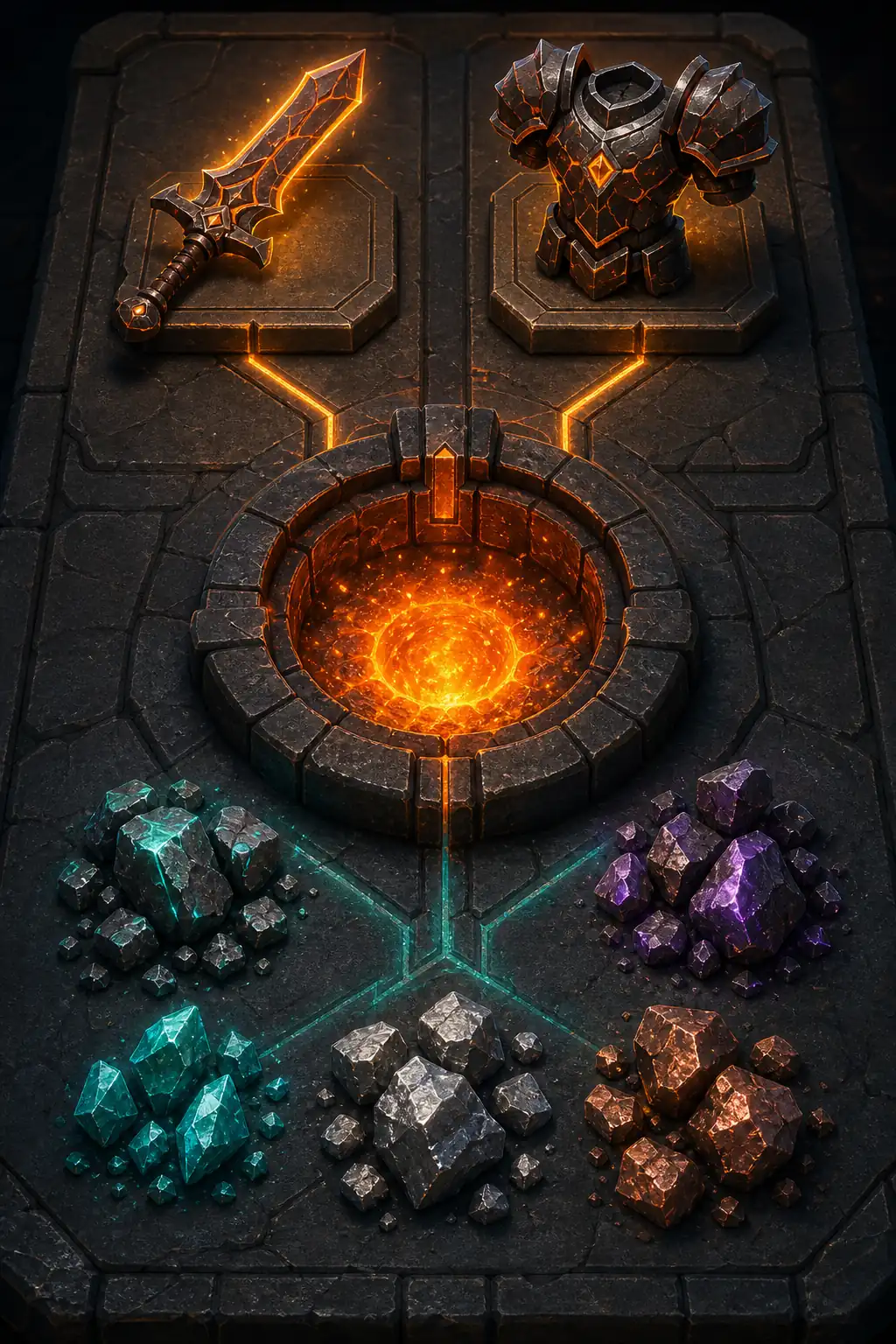
Editorial illustration, not an official Roblox screenshot: choose the target and materials before the forge attempt.
What is the safest way to craft in The Forge?
The safest approach is to treat crafting as a planning loop instead of a single lucky roll. Choose a weapon or armor goal first, decide which area and ore pool can support it, then compare the average multiplier, trait direction, material cost, and likely outcomes. A high-value ore is not automatically useful if it pushes the mix away from your target or leaves no room for a trait you actually need.
Use the recipe index when you want a starting combination, and use the calculator when you want to test a custom mix. Public guides and community tables are helpful references, but exact numbers can change after an update. When a result matters, keep the target and area fixed, change one input at a time, and verify the final behavior in Roblox before spending the last copy of a rare material.
1
clear target before choosing ores
3
checks: multiplier, trait, cost
1
input changed per comparison
Patch-aware
verify unusual numbers in game
The crafting loop: target, mix, test, verify
A good The Forge Roblox craft is easier to repeat when each decision answers one question. Keep the loop simple enough that you can explain why a recipe should work and what you will change if it does not.
1. Name the outcome
Decide whether the attempt is for a weapon, armor piece, trait test, progression upgrade, or an inexpensive experiment. A mix built for damage is not automatically a good armor mix, and a premium endgame attempt should not use the same budget rules as a first craft. Write the goal in one sentence before opening the recipe list.
2. Separate multiplier from trait
Multiplier support helps the overall quality direction, while a Weapon, Armor, All, or no-trait ore changes what the mix is trying to produce. Check both parts together. A strong multiplier with the wrong trait can be less useful than a slightly weaker mix that matches the item you actually want.
3. Protect your material budget
Keep a fallback recipe for every expensive test. Compare the expected improvement with the cost of replacing the rare ore, and do not spend the last copy just because a combination looks impressive. A safe, repeatable mix often teaches you more than a one-off gamble.
What to check before you call a mix a recipe
Use this table as a decision filter. The ore icons are visual references from the site's local The Forge dataset; they are not proof that one named ore is permanently best after every patch.
Decision point
Role
What to check
Best used for
Safe action
Aite
Baseline ore
Use as a simple reference point when comparing a stronger mix.
Budget tests and learning the calculator
Record the baseline before adding premium materials.
Cobalt
Support ore
Can fill a recipe without turning every test into a rare-ore gamble.
Early and mid-progression comparisons
Keep it as a fallback when the premium mix is too costly.
Aquajade
High-value ore
Treat the multiplier and area context as a pair rather than reading one number alone.
The Peak planning and expensive comparisons
Check the current location and calculator data before using it.
Rivalite
Weapon-trait option
Useful when the goal is a weapon-focused mix and the trait share is meaningful.
Weapon recipe experiments
Confirm the trait direction before increasing the rest of the multiplier.
Obsidian
Armor-trait option
Makes more sense in a defensive plan than in a damage-first weapon attempt.
Armor recipes and survivability checks
Compare it with a non-trait fallback instead of assuming the trait wins.
Recipe paths: budget, targeted, or premium
There is rarely one permanent best recipe for every player. Compare a cheap baseline, a targeted trait mix, and a premium mix while keeping the item goal and area consistent. This makes the trade-off visible instead of hiding it behind a single success percentage.
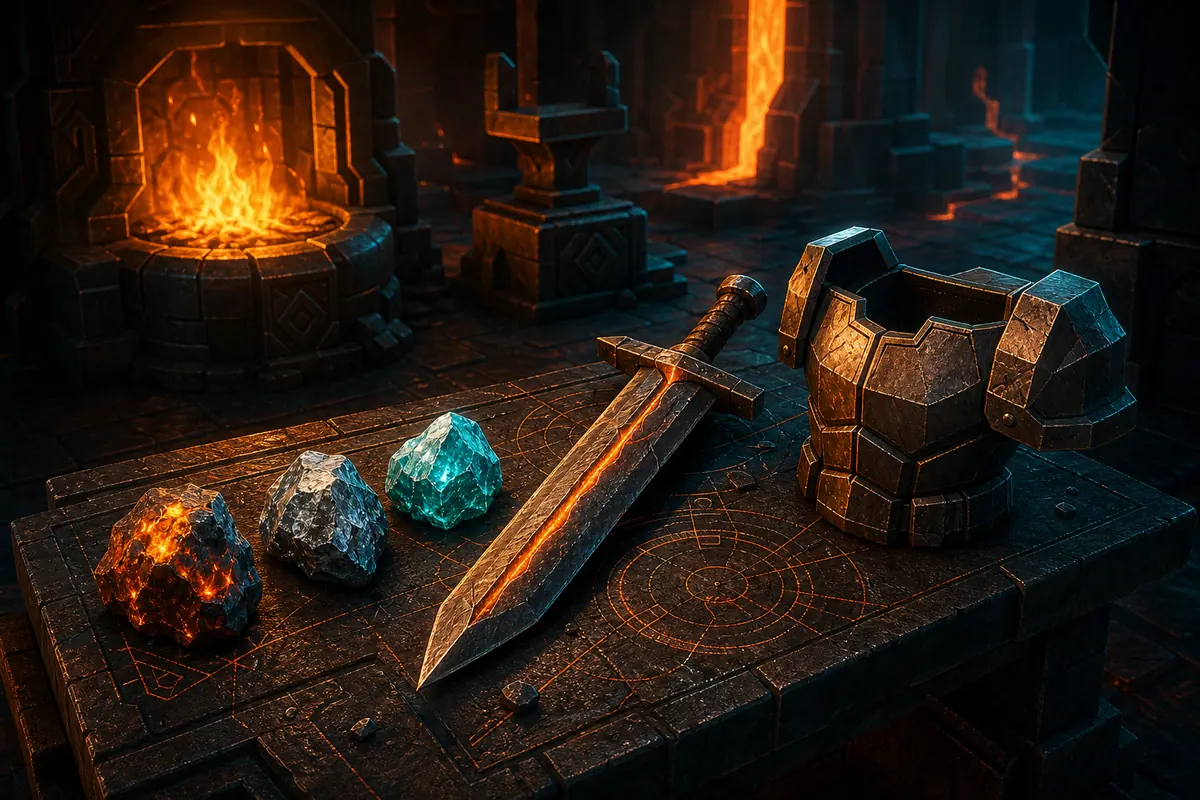
Editorial concept visual: the same planning loop can lead to a weapon path or an armor path depending on the target.
Budget path
Use common or mid-tier support ores to learn the outcome pattern and protect your inventory. A budget path is not wasted time: it tells you whether the target class, area, and basic multiplier behave as expected before you risk a rare ore.
Targeted path
Add a trait-bearing ore only when the target benefits from it. Check the current trait activation behavior shown by the calculator, then compare the targeted mix with the budget baseline. If the trait does not change the decision enough, save the material.
Premium path
Reserve the highest-value ores for a clear upgrade: a better role fit, a needed trait, or a meaningful increase in expected outcomes. Before crafting, calculate a fallback and decide what result would make you stop rather than immediately retry.
A repeatable The Forge crafting workflow
Use the following sequence for weapon recipes, armor recipes, and custom mixes. The order matters because it prevents a flashy ore from deciding the whole build before you know what the craft is supposed to do.
Choose the item role: farming weapon, boss weapon, defensive armor, or a test craft.
Check the current area and the ores you can realistically replace if the attempt fails.
Open the ore list and note multiplier, rarity, trait direction, and any update-sensitive location note.
Build a cheap baseline, then change one ore or one trait input at a time.
Compare the custom mix in the calculator with a known recipe from the recipe index.
Use the calculator as a test bench
The calculator is most useful before the craft: compare outcomes, costs, and trait direction without pretending that a community dataset is an official hidden formula. When an update changes a pool or item, retest the mix instead of copying an old result.
Editorial illustration, not a game screenshot: keep support ores, premium ores, and trait choices visibly separate while comparing a mix.
Four practical crafting examples
These are planning patterns, not guaranteed recipes. Replace the example inputs with the current ores and values shown by the game and the site's calculator.
Budget weapon test
Start with a low-cost support mix and record the weapon class, average result, and cost. If the result is already useful, keep the premium ore in reserve. If it is not, add one stronger input and compare the change rather than replacing the whole recipe at once.
Weapon-trait comparison
Build one neutral mix and one weapon-trait mix with similar multiplier support. Compare whether the trait changes the outcome enough to justify its price. This answers a more useful question than asking whether the trait ore is simply rare.
Defensive armor attempt
Keep the goal on survivability, then compare an armor-trait path with a high-multiplier non-trait fallback. Use the armor recipes guide and armor tier list for context, but verify the mix in the calculator before spending a limited defensive ore.
Post-update retest
After a patch, check the update notes, ore list, area, and recipe output in that order. Re-run one known baseline first. If the baseline changed, treat older community tables as historical context and retest every expensive mix before recommending it.
Continue planning your build
Use this guide for the decision sequence, then move to the page that answers the next narrower question. The links below are intentionally split between the calculator, data tables, and role-specific guides.
Choose the item that solves your next real bottleneck, such as faster farming, safer boss fights, or a defensive upgrade. Start with a replaceable or budget mix, then move to rare ores only when the expected improvement is clear.
Is there one best The Forge crafting recipe?
Not for every account or patch. The best recipe depends on the target item, area, available ores, trait direction, and cost of failure. Use the recipe index for a starting point and compare your own inventory in the calculator.
How do I use a trait ore in a craft?
First decide whether you need Weapon, Armor, All, or no special trait. Then check the current trait behavior and share guidance shown by the calculator. Compare the trait mix with a non-trait fallback; do not assume a rare trait is valuable when it does not support your target.
Should I follow Roblox The Forge recipes from a community guide?
Use community recipes as hypotheses, not permanent guarantees. Check the guide date, compare the materials and area with the current game, and test the combination locally before using rare ores. A recipe that worked before a balance or area update may need a new support ore.
Sources and update-sensitive references
The page combines the site's local calculator dataset with public reference pages. External guides are useful for discovery and terminology, but exact game values should be rechecked after updates.
The Forge on Roblox — Official game listing used for the game's public context; it is not a recipe database.
Choose one target, keep a fallback, and compare the mix before you spend a rare ore. The calculator and recipe index work best when you use them as planning tools rather than promises of a fixed result.
 Aite
Aite Cobalt
 Aquajade
 Rivalite
 Obsidian