The Forge Runes Guide: Best Runes, Slots, Farming, and Builds
Runes turn a good weapon, armor set, or pickaxe into equipment that fits a specific job. This guide explains which rune families belong on each item type, how rune slots work, where to find the Runemaker, which enemies drop useful runes, and how to choose traits without wasting Gold, Essences, or enhancement progress.

Quick answer: what are the best runes in The Forge?
The best rune depends on the slot and the problem you need to solve. For weapons, Blast Chip is useful for area damage, Drain Edge supports sustain, and elemental runes such as Flame Spark, Frost Speck, or Venom Crumb add specialized damage or control. For armor, Ward Patch is a defensive choice, Briar Notch reflects physical damage, and Rage Mark rewards risky low-health play. Pickaxes use Miner Shard, whose possible rolls include Luck, Yield, Swift Mining, and Mine Power.
Do not rank a rune by name alone. Rune quality and secondary traits are random, higher-tier runes can roll stronger primary traits and more secondary value, and the same rune can be excellent or mediocre depending on its numbers. Keep the rune that improves your actual bottleneck: survival for bosses, attack speed for a slow weapon, area damage for farming, or mining speed and yield for an ore route. Community data was checked on July 30, 2026, but live Roblox updates can change drops and values.
The Forge rune types and practical priorities
The table focuses on representative runes with clear jobs. It is a build-planning shortcut, not a promise that one rune will always beat every roll of another rune.
| Rune | Equipment | Main effect | Best for | Decision note |
|---|---|---|---|---|
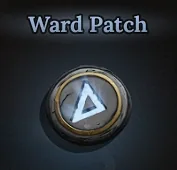 Ward Patch Ward Patch |
Armor | Shield, with possible defensive and mobility secondary traits. | Boss survival and safer progression. | Choose it when incoming physical damage is the problem; do not treat it as protection from every ranged effect. |
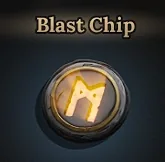 Blast Chip Blast Chip |
Weapon | Explosion damage with possible attack-focused secondary traits. | Crowd clearing and grouped enemies. | Strong for farming when proc chance and roll quality are good; a weak roll can lose to a better general weapon rune. |
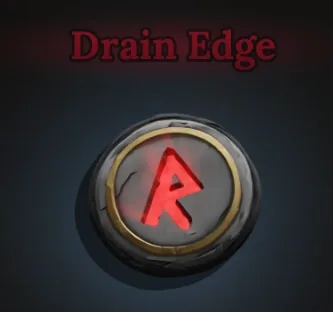 Drain Edge Drain Edge |
Weapon | Life Steal with possible attack speed, lethality, critical, or fracture rolls. | Sustain during long fights. | Useful when healing lets you stay active, but it does not replace damage if your weapon already struggles to finish enemies. |
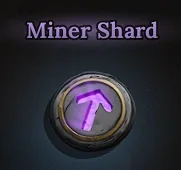 Miner Shard Miner Shard |
Pickaxe | Can roll Luck, Yield, Swift Mining, and Mine Power. | Ore farming and route efficiency. | Prioritize the stat that fixes your route: speed for slow nodes, yield for volume, luck for rare drops, or power for tougher mining targets. |
How rune slots and the Runemaker work
Runes are applied at the Runemaker, an NPC found near forge areas in worlds such as Stonewake's Cross, Forgotten Kingdom, and Frostspire Expanse. The Runemaker embeds a rune you already own; he does not create the rune. Applying one costs resources such as Gold and Essences, so the useful decision happens before you open the menu.
Pickaxes already support rune slots. Weapons and armor need enhancement progress before slots become available. Community wiki guidance says a new slot is unlocked every third enhancement level, with +3 and +6 being important thresholds. Higher enhancement attempts can fail and reduce the enhancement level. If a lost level removes a slot, the equipped rune should return to inventory, but the failed enhancement still costs time and materials.
- Choose the finished weapon, armor piece, or pickaxe you expect to keep long enough to justify the cost.
- Enhance weapons or armor until the required rune slot appears; avoid pushing a disposable item only because a rune is available.
- Check compatibility: armor runes go on armor, weapon runes on weapons, and Miner Shard-style runes on pickaxes.
- Compare the primary trait and every secondary roll instead of judging only the rune's tier or visual effect.
- Embed the rune at the Runemaker, then test the item in the activity it was built for before investing in another slot.
A practical rune tier list by use case
A universal S-to-D list hides too much context. A better tier list starts with the activity, then ranks the rune by whether its main effect and secondary rolls solve that activity efficiently.
Top weapon choices
- Blast Chip for area damage and repeated farming packs.
- Drain Edge for sustain in long encounters.
- Flame Spark or Venom Crumb for damage-over-time pressure.
- Frost Speck or Chill Dust when control and slowing create safer openings.
Top armor choices
- Ward Patch when physical damage is ending runs.
- Briar Notch when reflected damage suits a durable build.
- Rage Mark for players who intentionally fight near low health.
- Vitality, Endurance, Phase, Stride, Surge, and Swiftness rolls should match the race and movement plan you already use.
Top pickaxe choices
- Swift Mining for a route limited by node time.
- Yield for more ore per successful mining loop.
- Luck when rare ore or enemy drops are the target.
- Mine Power when harder nodes slow the route more than travel does.
When a lower-tier rune wins
- Its roll values are much higher than the named alternative.
- Its secondary traits fit the weapon speed or armor weakness better.
- It improves the activity you do most instead of a theoretical boss build.
- It preserves a rare rune for equipment with better enhancement and long-term value.
Where to farm runes
Rune drops are tied to specific enemies and worlds. Treat the list below as a route-planning map and verify it in the live game, because spawn tables and update areas can change.
Stonewake's Cross
Delver Zombies are associated with Miner Shard I, making the early area relevant when your first goal is a better mining loop rather than a combat rune.
Forgotten Kingdom
Bomber Skeletons can drop Miner Shard I or Blast Chip I; Reapers are associated with Flame Spark I and Drain Edge I. Other skeleton and slime enemies cover Briar Notch, Rage Mark, and Venom Crumb.
Frostspire and Crimson Sakura
Frostspire enemies add Frost Speck and Rage Mark routes, while the Ice Golem can drop higher-tier mining and frost runes. Crimson Sakura enemies expand Rage Mark, Briar Notch, Ward Patch, and Flame Spark options.
How to match runes with weapons, armor, and pickaxes
A rune build should connect three systems: the item you crafted, the race or playstyle you use, and the content you repeat. Use the calculator and existing guides to decide whether the base equipment deserves the rune before optimizing small percentages.
Fast weapon farming build
- Start with a fast straight sword, katana, or another weapon you can hit with consistently.
- Use Blast Chip for grouped enemies or a strong attack-speed/lethality roll for steady damage.
- Add armor mobility or survival traits only after the weapon already clears efficiently.
- Compare the base weapon path in the best-weapons guide before spending on extra slots.
Boss sustain build
- Use a dependable high-damage weapon instead of forcing a rune onto a weak base item.
- Drain Edge can support recovery, while Ward Patch can reduce physical pressure.
- Avoid relying on Berserker unless your timing and low-health risk are intentional.
- Test the build against the boss pattern, not only a training target or tooltip.
Ore farming build
- Pick the ore and world first, then identify whether travel, node durability, or low drop rate is the bottleneck.
- Use Miner Shard rolls that address that exact limit.
- Do not over-enhance a pickaxe you plan to replace after the next world unlock.
- Use the ore index and pickaxe guide to plan the full route, not only the rune.
Balanced progression build
- Keep one reliable combat item and one mining item instead of spreading resources across every slot.
- Prefer flexible secondary traits until your final playstyle is clear.
- Save high-quality or higher-tier runes for equipment with multiple useful slots.
- Recheck update notes when a new world changes enemy drops or equipment value.
Common rune mistakes
Ranking only the main effect
Two copies of the same rune can roll differently. Compare secondary traits and values before replacing a rune that already fits the build.
Enhancing a temporary item
Slots are valuable only when the equipment is worth keeping. A short-lived upgrade can consume Gold and Essences without improving the next world.
Ignoring compatibility
Armor, weapon, and pickaxe runes are separate categories. Farming a popular weapon rune does not help a mining route unless the correct pickaxe rune also drops.
Copying an outdated tier list
Enemy drops, areas, and trait values can change. Verify the live game and recent community data before following an old route exactly.
Sources and update notes
This guide uses community-maintained mechanics and current editorial comparisons. The community images are attributed and are not presented as official screenshots. Check date: July 30, 2026.
- The Forge community wiki Runes page for rune categories, traits, enemy drops, and slot mechanics; last recorded revision checked was May 3, 2026.
- The Forge community wiki Runemaker page for NPC purpose, resource requirements, and location guidance.
- Beebom rune tier list for an external use-case comparison of weapon, armor, and pickaxe rune choices.
- The Forge on Roblox for the live experience where current mechanics should be verified before spending resources.
The Forge runes FAQ
What is the best rune in The Forge?
There is no permanent best rune for every item. Blast Chip is useful for area farming, Drain Edge for sustain, Ward Patch for physical defense, and Miner Shard for pickaxe efficiency. Roll quality, secondary traits, and the activity matter more than the name alone.
How do I unlock rune slots?
Pickaxes already support rune slots. Weapons and armor need enhancement progress, with community guidance indicating a new slot every third enhancement level. Failed high-level enhancements can reduce the item level, so enhance equipment you plan to keep.
Where is the Runemaker?
Community guidance places the Runemaker near forge areas in Stonewake's Cross, Forgotten Kingdom, and Frostspire Expanse. He embeds runes you own and charges resources such as Gold and Essences.
Where do Miner Shard runes drop?
Delver Zombies and Bomber Skeletons are associated with Miner Shard I, while the Ice Golem can drop Miner Shard II. Verify the live spawn and drop table after major updates.
Can I put any rune on any item?
No. Armor runes apply to armor, weapon runes to weapons, and Miner Shard-style runes to pickaxes. The equipment also needs an available compatible slot.
Do higher-tier runes always win?
Not automatically. Higher tiers can provide stronger primary traits and more secondary value, but a lower-tier rune with excellent rolls and better build fit can be the smarter choice.
Build the base item before optimizing the rune
Compare weapons, armor, ores, and pickaxe priorities first. Once the base equipment fits your route, use the rune whose main effect and secondary rolls solve the next real bottleneck.