Quick Answer
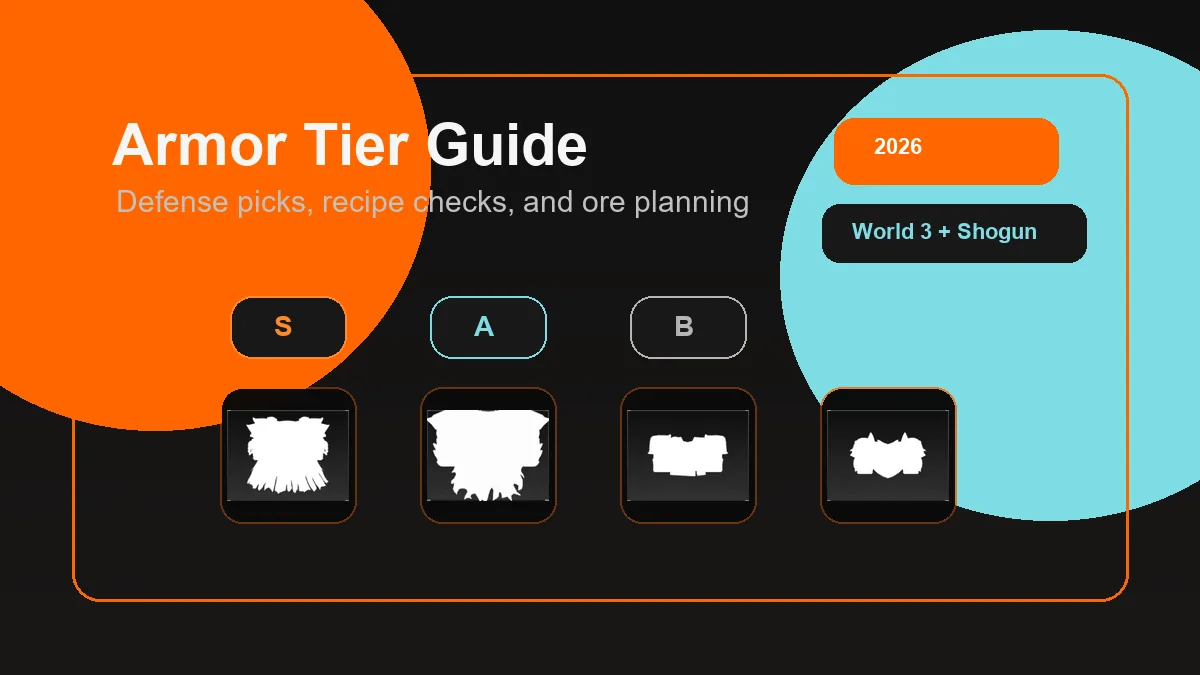
Pour chercher des recettes d’armure The Forge, commencez par le besoin : progression économique, heavy armor World 3, survie contre les boss ou défense premium. Une bonne recette doit avoir une cible et au moins un résultat de repli portable.
Pour la heavy armor, combinez des minerais à trait défensif avec assez de multiplicateur pour atteindre de meilleures familles d’armure. Comparez toujours une version chère avec une version moins coûteuse.
Best Armor Recipe Goals to Test First
These are not guaranteed recipes. They are practical recipe goals: choose the target, open the calculator, then replace ores based on what you actually own.
Budget defense recipe
Use this when your account still needs reliable protection and you cannot afford to waste rare materials. Keep the mix cheap, include one armor-trait ore if possible, and accept medium armor as a useful result.
early account
low ore cost
safe fallback
World 3 heavy armor recipe
Use this when enemies punish light armor and you need more room for mistakes. The recipe should favor sturdy armor outcomes, but it still needs a fallback that you would actually wear.
World 3
heavy armor
boss safety
Premium boss armor recipe
Use this only after the calculator shows that several strong armor outcomes are possible. Premium defensive ores are valuable, so the attempt must improve survival enough to justify the cost.
late game
premium ores
high defense
Armor Recipe Testing Workflow
Use this sequence whenever a video, comment, or wiki page gives you a promising armor recipe. The goal is to avoid spending rare ores before you know the fallback outcomes.
Before you craft
- Choose one armor job: farming, World 3 defense, boss safety, or premium set hunting.
- Open the calculator and set the same forge area you plan to use in-game.
- Add the recipe ores, then remove the most expensive ore and compare the odds.
- Check whether the fallback armor pieces are still wearable for your account.
After you compare recipes
- Save premium ores for the recipe with the best useful-outcome range, not just the highest jackpot.
- Prefer a mix that can land several good armor pieces over one that needs one named result.
- If two recipes are close, craft the cheaper one first and keep the premium mix for bosses or late-game goals.
- Recheck old recipes after major Roblox updates or new ore discoveries.
Defensive Ore Traits and Recipe Control
Armor recipes become safer when trait planning and multiplier planning work together. Do not add a defensive ore just because it is rare; add it because it improves the armor result and still leaves the average in the right range.
Armor-trait support
Obsidian, Uranium, Mythril, Lightite, Demonite, Darkryte, Pumice, Graphite, Aetherit, Velchire, Sanctis, Mosasaursit, Duranite, Heart Of The Island, and Etherealite are useful first checks for armor-oriented mixes.
Fallback planning
A recipe is safer when the second and third likely armor outcomes still solve your problem. If only one rare chestplate matters, lower the ore cost or wait.
Inventory pressure
The best armor recipe for a new account is often different from the best recipe for a boss-ready account. Judge the recipe by what it costs you right now.
External Armor References Checked
Ces références ont servi à vérifier les noms d’armure et l’intention de recherche. Les chances finales doivent être testées dans le calculateur.